Biological Treatment Shock Loads in Leather Wastewater
Leather goods effluent treatment plants rarely receive a steady wastewater profile. Beamhouse residues, wet-end carryover, fatliquor losses, washdown water, drum dump timing, pH swings, and production peaks can all arrive at the ETP in uneven pulses.
For an environmental manager, the problem is not only high COD or BOD on a report. The operational problem is instability: aeration basins lose balance, odor increases, sludge becomes harder to settle, and final discharge becomes less predictable.
Peltora supplies enzyme solutions for tannery wastewater treatment programs where biological systems need better resilience against variable organic load, grease, proteinaceous residues, sulfide-related odor pressure, and sludge stress.
What a shock load looks like in a leather ETP
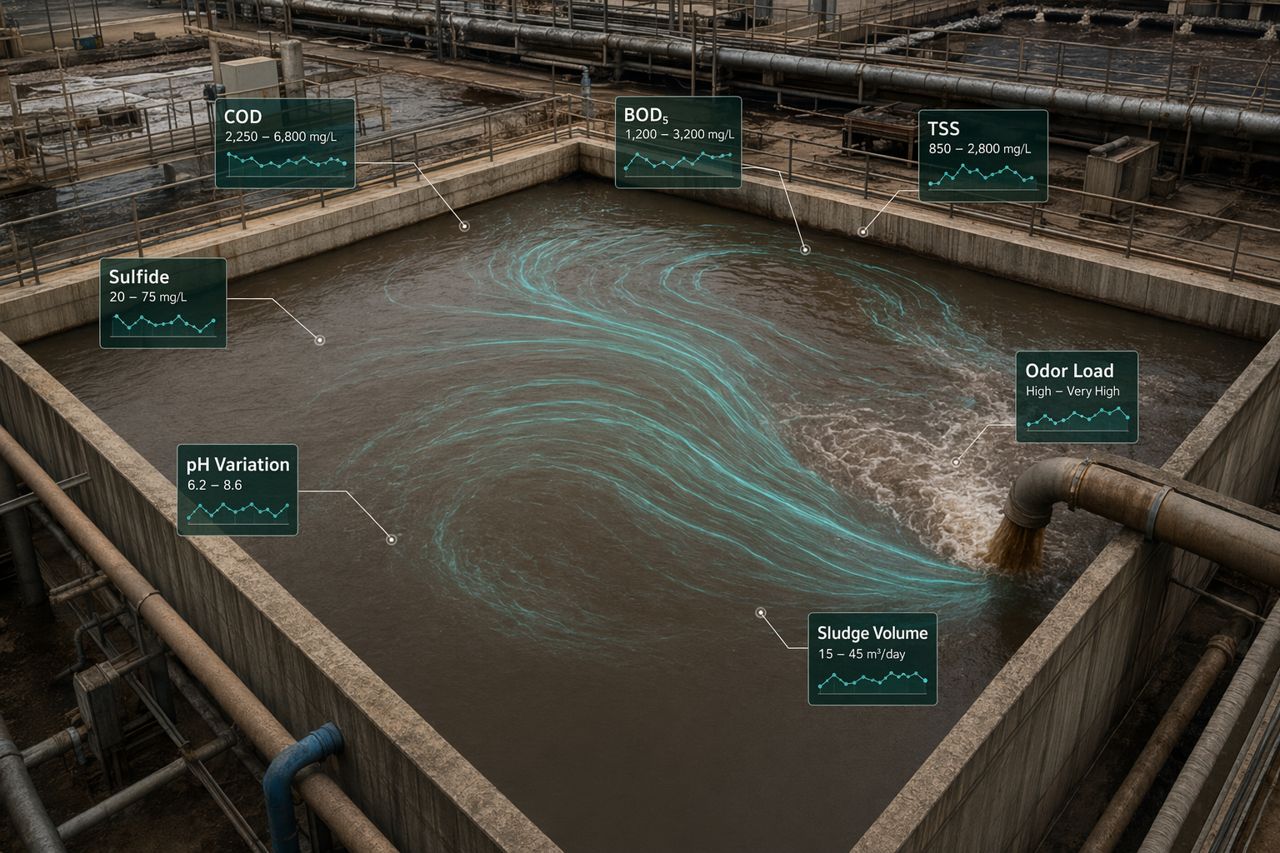
A shock load is any sudden change that pushes the biological treatment stage outside its normal operating window. In leather wastewater, this is often caused by a combination of organic strength, grease, suspended solids, salts, sulfide, alkalinity, and pH variation—not a single parameter.
Common triggers include:
- Concentrated beamhouse discharge entering the equalization tank too quickly
- High protein and hair breakdown residues from soaking, liming, and unhairing operations
- Fat, oil, grease, and surfactant carryover from processing and washdown
- Wet-end and finishing surges that alter biodegradability
- Incomplete equalization before biological treatment
- High-strength batch dumps during shift changes or end-of-day cleaning
- pH correction delays after alkaline or acidic streams enter the ETP
- Sludge return imbalance after a heavy solids event
When these conditions reach the biological stage abruptly, microorganisms may slow down, filamentous growth may increase, and settling can deteriorate. The plant may still be running, but its margin for compliance becomes narrower.
Why leather wastewater is different from general industrial wastewater
Leather goods manufacturing produces an effluent profile with a distinct mix of biodegradable and difficult-to-handle fractions. Protein residues, fatliquor components, emulsified grease, sulfide-bearing streams, chromium or tanning carryover depending on segregation, and high suspended solids can interact in ways that strain conventional biological treatment.
This matters because biological systems perform best when the incoming load is consistent and accessible. A sudden influx of dense protein and fat can create localized oxygen demand, scum, odor, and sludge bulking before the biomass has time to adapt.
For tannery ETP teams, the practical question is not simply, “Can the biology treat leather wastewater?” It is, “Can the biology recover quickly when today’s production mix is different from yesterday’s?”
Operational signs that the biology is under shock
Environmental managers often see shock load effects before lab results confirm them. Warning signs include:
- Faster odor development near equalization, primary treatment, or aeration
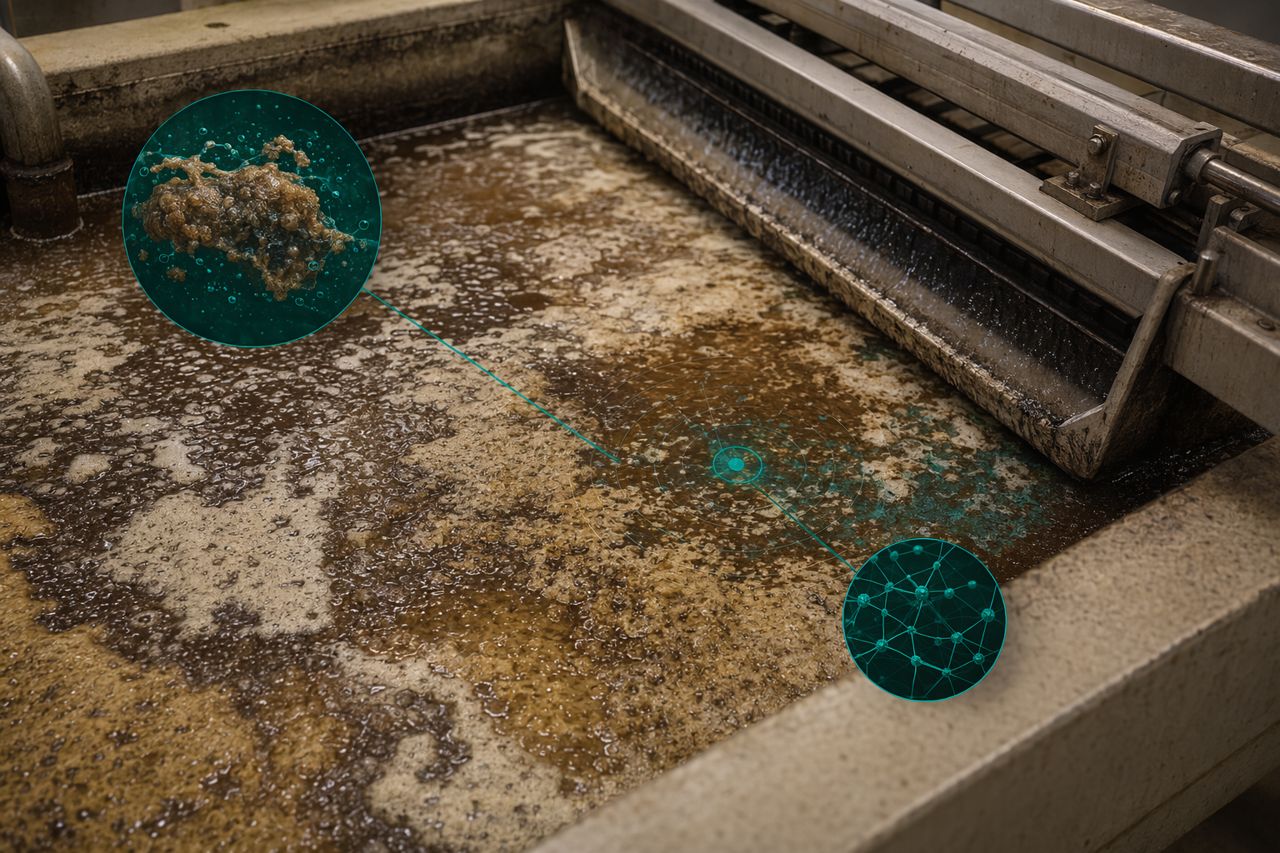
- Rising foam or scum linked to grease and surfactant carryover
- Slower sludge settling and cloudy supernatant
- Higher return sludge stress or wasting adjustments
- Fluctuating dissolved oxygen demand in aeration
- More frequent pH correction events
- Final clarifier carryover after a production surge
- COD, BOD, TSS, or sulfide movement outside the expected trend
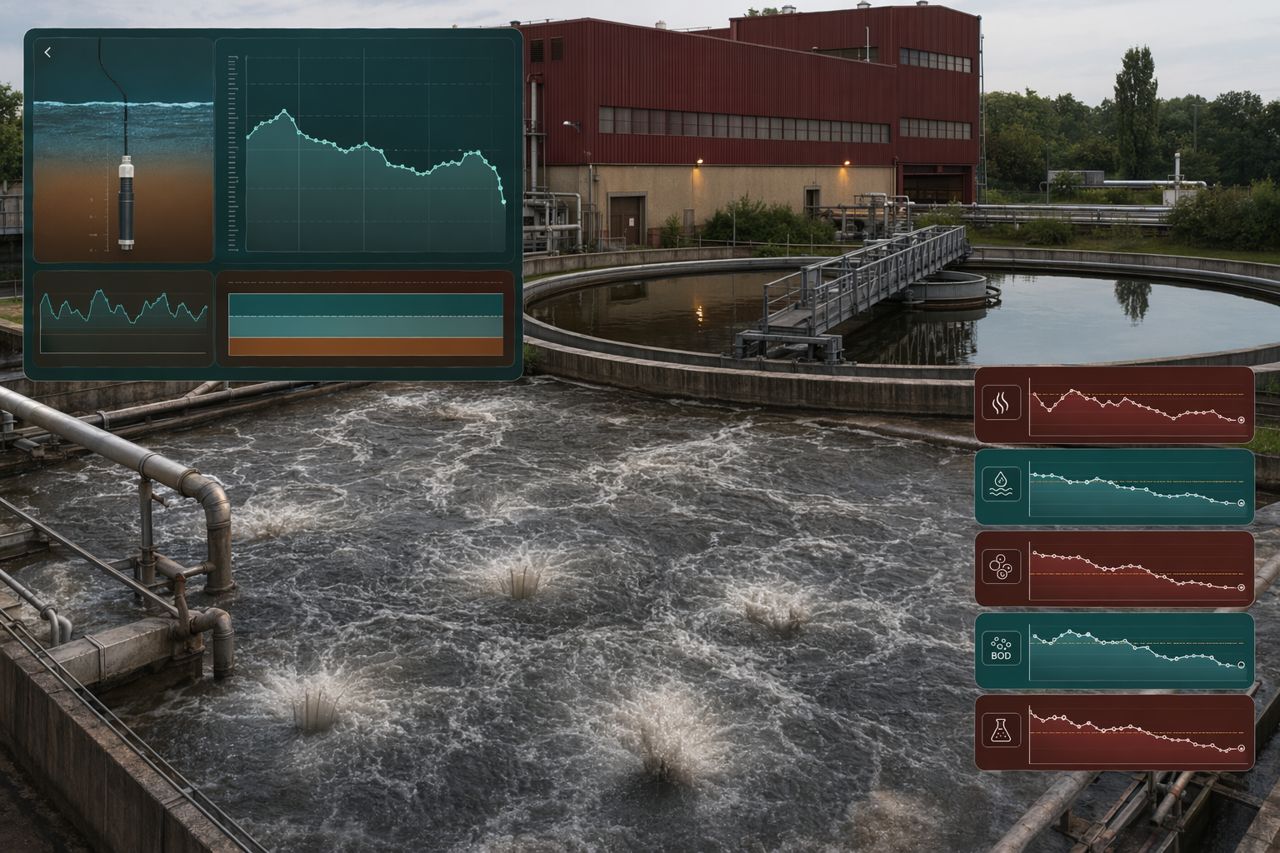
A single indicator may not prove a shock event. A pattern across odor, sludge behavior, oxygen demand, and effluent quality usually gives a clearer operating picture.
Where enzymes fit in a shock-load control strategy
Enzymes do not replace equalization, aeration control, primary solids removal, pH management, or trained ETP operation. They are used to improve how certain organic fractions are prepared for biological treatment.
In leather wastewater, an enzyme program may support:
- Breakdown of proteinaceous residues into more treatable fractions
- Improved handling of fat, oil, and grease before it accumulates as scum
- Reduced organic stress entering the biological stage
- More consistent substrate availability for biomass
- Better sludge conditioning when organic solids are a recurring burden
- Lower odor pressure associated with anaerobic pockets and overloaded zones
The goal is not to force the plant harder. The goal is to reduce the severity of incoming variation so the biological system has a more stable feed profile.
Practical dosing locations in leather goods ETPs
The right application point depends on plant layout, wastewater segregation, hydraulic retention, pH profile, and where the shock load first becomes visible.
Typical review points include:
Equalization tank
This is often the first location to consider because it receives mixed wastewater and can provide contact time before downstream treatment. Enzyme use here is most relevant when protein, grease, odor, or organic load spikes are visible before biological treatment.
Grease trap or primary treatment inlet
Where fatliquor carryover, oils, and floating scum are persistent, enzyme support upstream of primary separation may help reduce grease-related stress and improve downstream consistency.
Aeration basin inlet
For plants with limited upstream contact time, dosing near the biological inlet may be considered. This requires careful review of pH, temperature, flow variability, and biomass condition.
Sludge handling interface
When sludge volume, dewatering behavior, or organic solids accumulation creates operating pressure, enzyme selection may be reviewed as part of a sludge-conditioning support program.
Peltora evaluates the plant reality before recommending a position. A program that looks good on paper but ignores retention time, pH swings, and batch discharge timing will not be robust in a tannery environment.
Managing shock loads before they reach biology
Enzyme support works best when paired with sound ETP control. For leather goods facilities, the most effective shock-load plans usually include:
- Better segregation of high-strength streams where practical
- Smoother drum dump scheduling to avoid concentrated pulses
- Adequate equalization mixing and retention
- Fast response to pH drift before aeration
- Regular observation of foam, scum, odor, and sludge blanket behavior
- Trending of COD, BOD, TSS, sulfide, flow, pH, and sludge volume
- Communication between production and ETP teams before unusual batches
The ETP should not be the last team to know when production changes.
What Peltora looks at before recommending an enzyme solution
As an enzyme supplier for tannery wastewater treatment, Peltora focuses on the operating conditions that determine whether a program can be stable on site.
A technical review typically considers:
- Source streams: soaking, liming, unhairing, deliming, bating, tanning, retanning, dyeing, fatliquoring, finishing, and washdown
- Load pattern: batch dumps, shift peaks, weekend restarts, seasonal production changes
- ETP layout: screening, equalization, primary treatment, biological stage, clarification, sludge handling
- Problem symptoms: odor, scum, foam, poor settling, high sludge volume, COD or BOD spikes, TSS carryover
- Operating constraints: pH correction, retention time, aeration capacity, mixing, temperature, and chemical compatibility
- Compliance pressure: discharge limits, internal targets, reporting frequency, and risk tolerance
This allows the enzyme program to be built around the actual plant—not a generic wastewater assumption.
Explainer video: shock loads in leather wastewater
The embedded one-minute explainer below shows how sudden protein, fat, sulfide, pH, and sludge load can disturb biological treatment, and where enzyme support can help smooth the incoming organic profile before compliance risk increases.
Buyer value: what a stable program should deliver
For a leather goods ETP, the value of enzyme support is measured in operational stability, not marketing claims.
A well-fit program should help the team pursue:
- More predictable biological treatment under variable production schedules
- Less odor escalation during high-strength wastewater events
- Better handling of grease and protein load before it disrupts aeration
- Reduced sludge stress linked to organic solids accumulation
- Fewer urgent corrections after shock events
- Clearer communication between production changes and ETP response
- A stronger compliance buffer when influent quality shifts
Results depend on wastewater character, plant control, and application discipline. Peltora’s role is to help define the right enzyme approach and support practical implementation.
Request a quote for a tannery ETP enzyme review
If your leather goods effluent treatment plant is dealing with COD or BOD surges, odor episodes, grease carryover, sludge settling issues, or unstable biological performance, Peltora can review your process and recommend an enzyme supply program matched to your site constraints.
Use the on-site request a quote form and include your wastewater source streams, current treatment steps, main operating symptoms, and target outcomes. A Peltora specialist will respond with next-step questions and a practical supply recommendation.