Laccase for Leather Wastewater Polishing Support
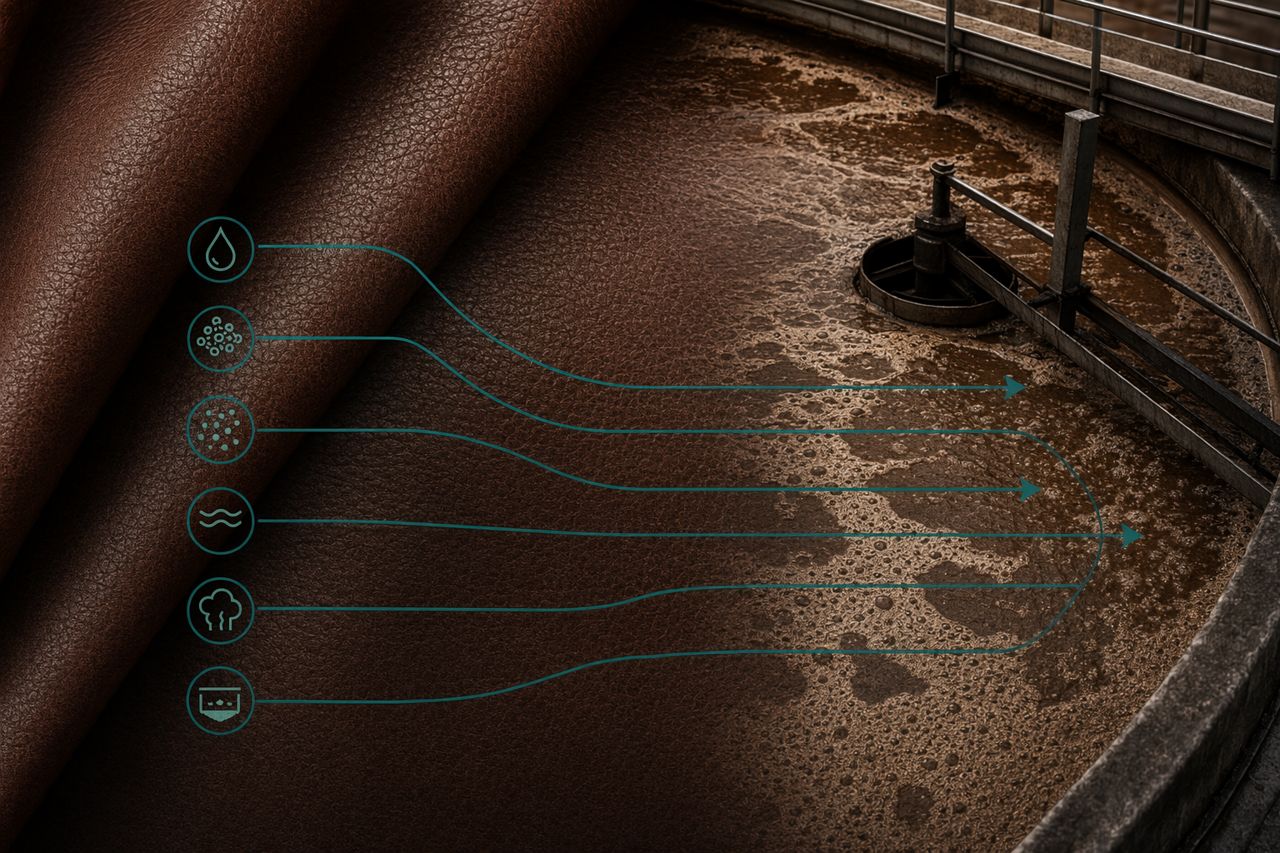
Leather goods ETPs rarely deal with one clean waste stream. Beamhouse residues, retan and dyehouse carryover, surfactants, fatliquor traces, chromium segregation discipline, sulfide history, suspended solids, and seasonal production mix all influence how polishing behaves.
Peltora supplies laccase for leather wastewater polishing support where dye-associated color, phenolic compounds, and hard-to-shift residual organics create pressure on final discharge consistency. We position laccase as a supporting biological tool inside a controlled treatment strategy, not as a shortcut around equalization, primary treatment, aeration, clarification, filtration, or chemical controls.
If you are looking for an enzyme supplier for tannery wastewater treatment that understands ETP constraints, Peltora can help you evaluate whether laccase belongs in your polishing program.
Where laccase can fit in a leather effluent strategy
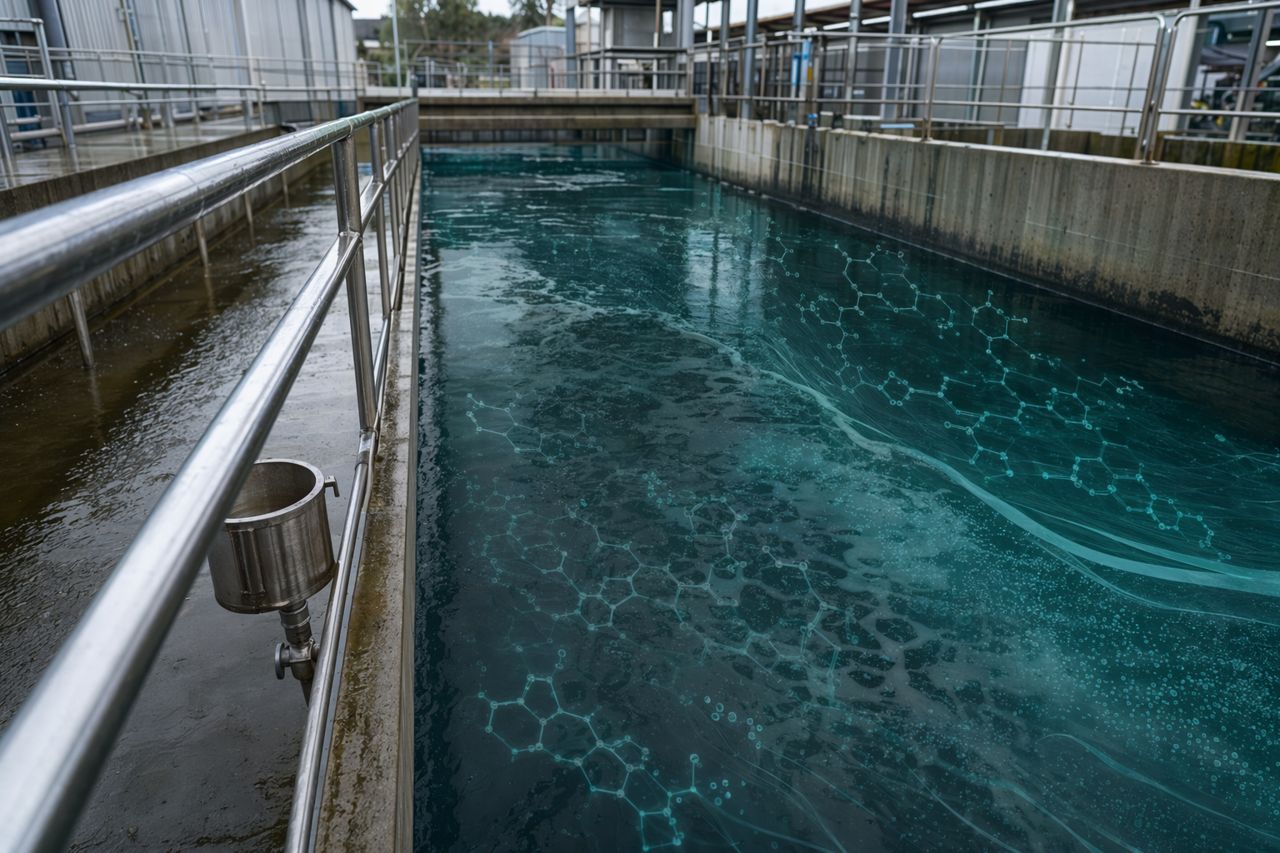
Laccase is an oxidative enzyme used to support the transformation of certain phenolic and dye-related compounds. In leather wastewater, its practical role is usually evaluated around polishing stages, side-stream trials, or targeted treatment windows rather than bulk replacement of the ETP.
Typical evaluation points include:
- Final color polishing after biological treatment
- Dyehouse and finishing-related streams with persistent color load
- Phenolic and aromatic residuals that influence COD behavior
- Polishing steps before tertiary filtration or discharge
- ETP optimization projects where chemical demand, odor, or sludge handling is under review
The right fit depends on wastewater composition, pH profile, salinity, solids load, retention time, redox conditions, and the stability of upstream operations.
Built for tannery wastewater realities
Leather goods wastewater can change by shift, article type, recipe, and rework load. A polishing aid that performs in a clean bench sample may behave differently once exposed to equalization tank variability, lime carryover, sulfide residues, surfactants, auxiliaries, fat/protein load, and mixed dye chemistry.
Peltora supports evaluation with plant-literate questions:
- Is the target issue color, phenolic load, residual COD, odor association, or sludge behavior?
- Is the stream segregated, partially mixed, or fully combined?
- Are high-solids or high-fat periods masking polishing performance?
- Is the ETP operating under stable aeration, pH, and settling conditions?
- Will enzyme-assisted polishing be measured against discharge risk, chemical usage, sludge volume, or final visual quality?
This keeps the discussion tied to plant outcomes, not generic enzyme claims.
What buyers usually want from laccase support
Environmental managers and ETP heads are typically not buying an enzyme for the label. They are buying a controlled way to test whether polishing performance can become more predictable.
Peltora focuses on buyer value such as:
- Better control of dye-associated color issues where conventional treatment leaves residual tone
- Support for polishing phenolic and aromatic wastewater fractions
- Reduced surprise at final discharge points when production mix changes
- A practical trial structure that does not disrupt core ETP operation
- Compatibility review with existing chemical, biological, and tertiary systems
- Clear decision criteria before moving from sample evaluation to plant trial
Laccase does not replace engineered treatment
For tannery wastewater, laccase should be treated as a process support tool. It does not replace equalization, coagulation-flocculation, dissolved air flotation, biological oxidation, clarification, sludge dewatering, or compliant handling of chrome-bearing streams.
A credible enzyme program starts by defining where the enzyme has a realistic role. In many plants, that means working around a defined side stream, a post-biological polishing point, or a controlled tertiary support step. Peltora helps ETP teams avoid overpromising and focus on measurable improvements that matter at site level.
Trial planning for leather goods ETPs
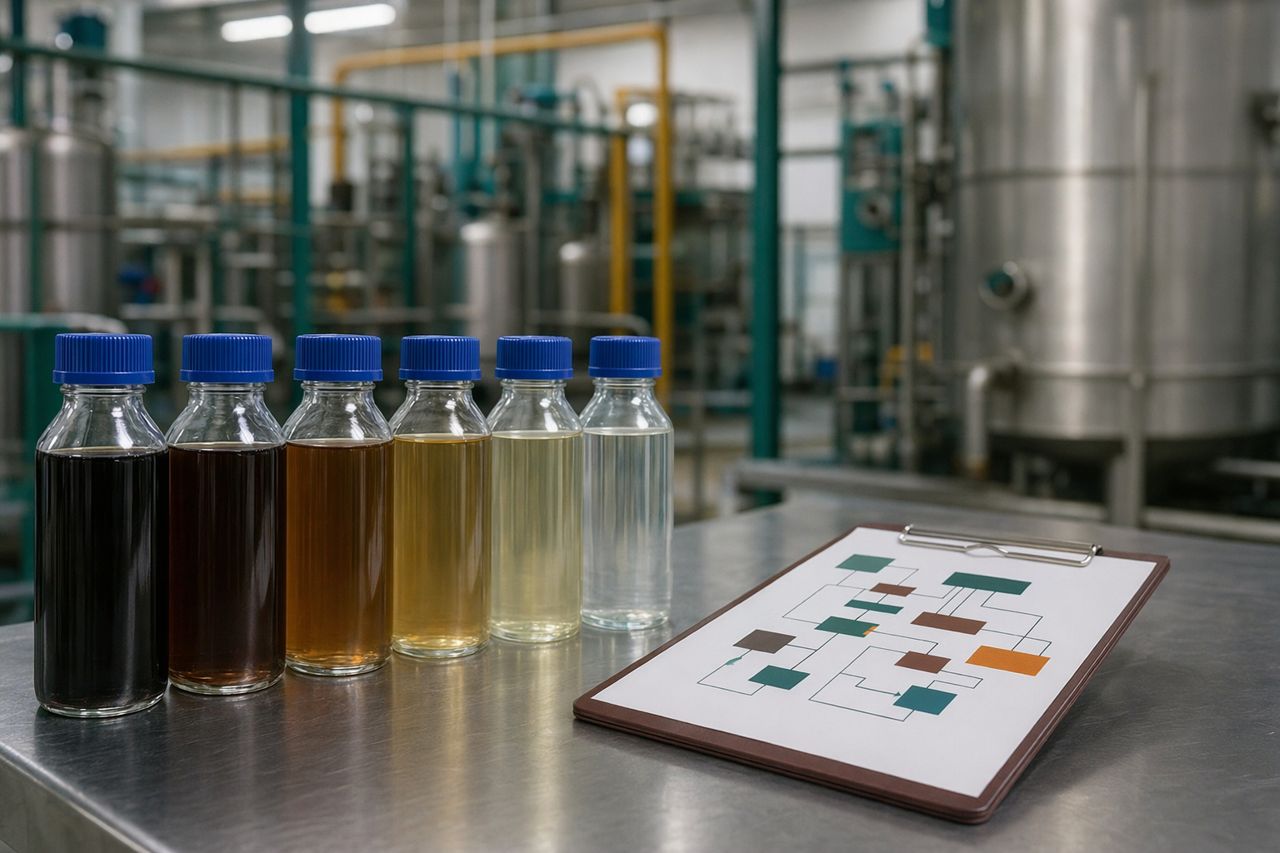
A useful laccase trial should be simple enough for the plant to run and strict enough to produce a decision. Peltora can support your team with a practical evaluation framework covering:
- Current ETP flow and process map
- Key wastewater sources feeding the polishing problem
- Baseline data for color, COD, BOD, TSS, sulfide history, pH, odor observations, and sludge behavior
- Sample handling and treatment conditions that reflect plant reality
- Side-by-side comparison against current polishing practice
- Scale-up considerations before live plant dosing
The goal is not to create a lab result that cannot be used. The goal is to determine whether laccase can help your ETP under operating conditions your team actually faces.
Suitable discussion points for a quote request
To quote responsibly, Peltora needs enough context to match the product recommendation and support level to the plant problem. Useful details include:
- Type of leather goods produced and main wet-end processes on site
- Whether effluent is segregated by beamhouse, chrome, dyehouse, or finishing areas
- Current ETP flow pattern and polishing steps
- Primary pain point: color, phenolic load, residual COD, odor, sludge, or discharge variation
- Typical pH range and solids load at the proposed treatment point
- Current chemical treatment approach and tertiary equipment
- Whether you want sample evaluation, pilot support, or recurring supply
Request a quote
If your plant is evaluating laccase for leather wastewater polishing, send Peltora your ETP context and target outcome. We will respond with a practical supply recommendation and the information needed for a controlled trial.