Enzyme Program for Leather Goods Factory Wastewater
Leather goods factories do not send a neat, uniform stream to the ETP. Bag, shoe, belt, upholstery, and accessories production can combine beamhouse carryover, fatliquor residues, finishing chemicals, washdown water, buffing fines, suspended protein, emulsified fat, sulfide alkalinity, and variable pH into one difficult wastewater profile.
Peltora supplies enzyme programs for plants that need more stable discharge, lower odor, better sludge behavior, and fewer compliance surprises. If you are looking for an enzyme supplier for tannery wastewater treatment, our focus is practical: fit the enzyme logic to the actual equalization tank, treatment sequence, operator routines, and variability of your leather goods factory.
Request a quote through the on-site form
Why leather goods effluent is hard to stabilize
Leather goods ETPs often inherit variability from upstream production rather than one continuous process. The effluent profile can change by article type, hide source, retanning chemistry, finishing schedule, cleaning routine, and batch timing.
Common operating pressure points include:
- High COD and BOD contribution from soluble and colloidal organic load
- Protein residues from beamhouse and wet-end operations
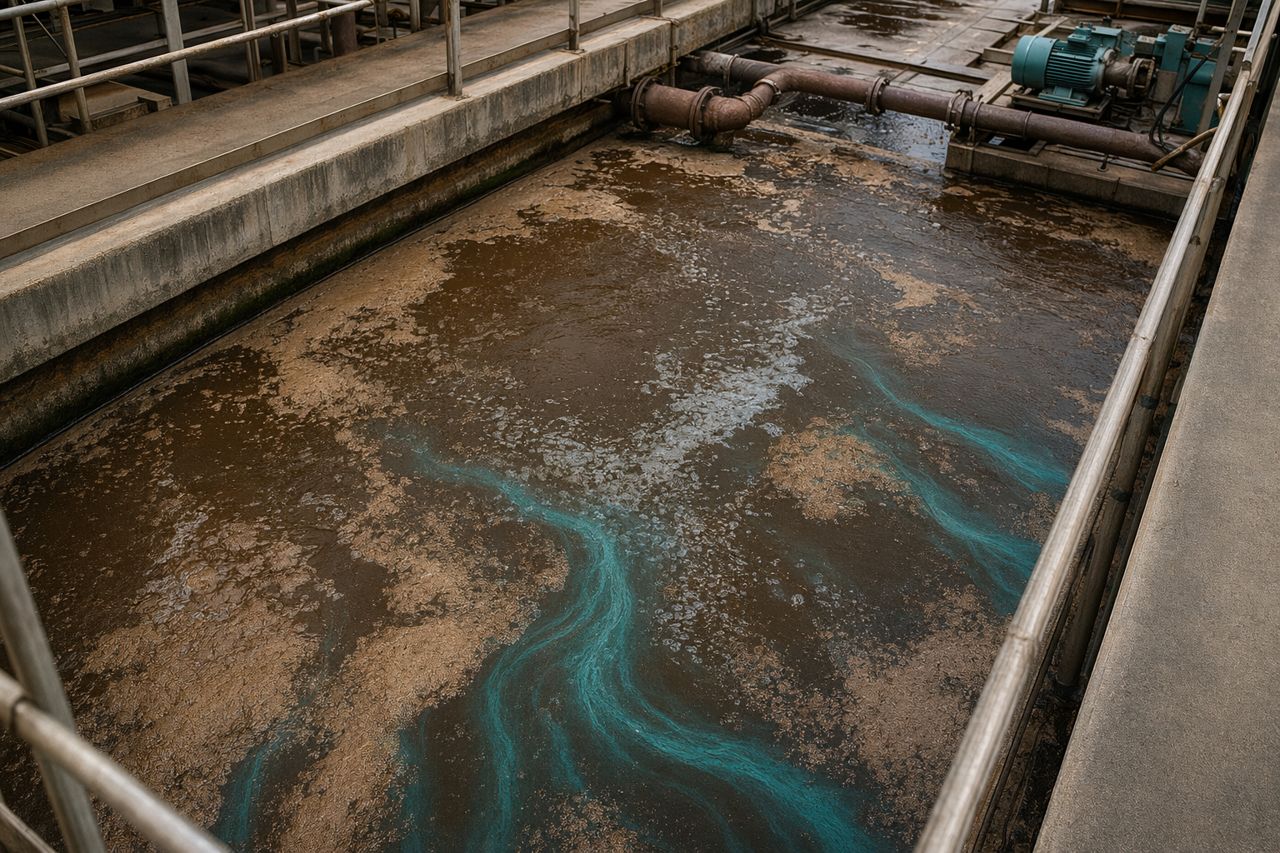
- Fat, oil, grease, and fatliquor carryover that can float, emulsify, or coat biomass
- Sulfide and alkaline residues that increase odor risk and upset biological treatment
- Fine suspended solids from shaving, buffing, trimming, and floor washdown
- Scum formation in equalization or primary treatment
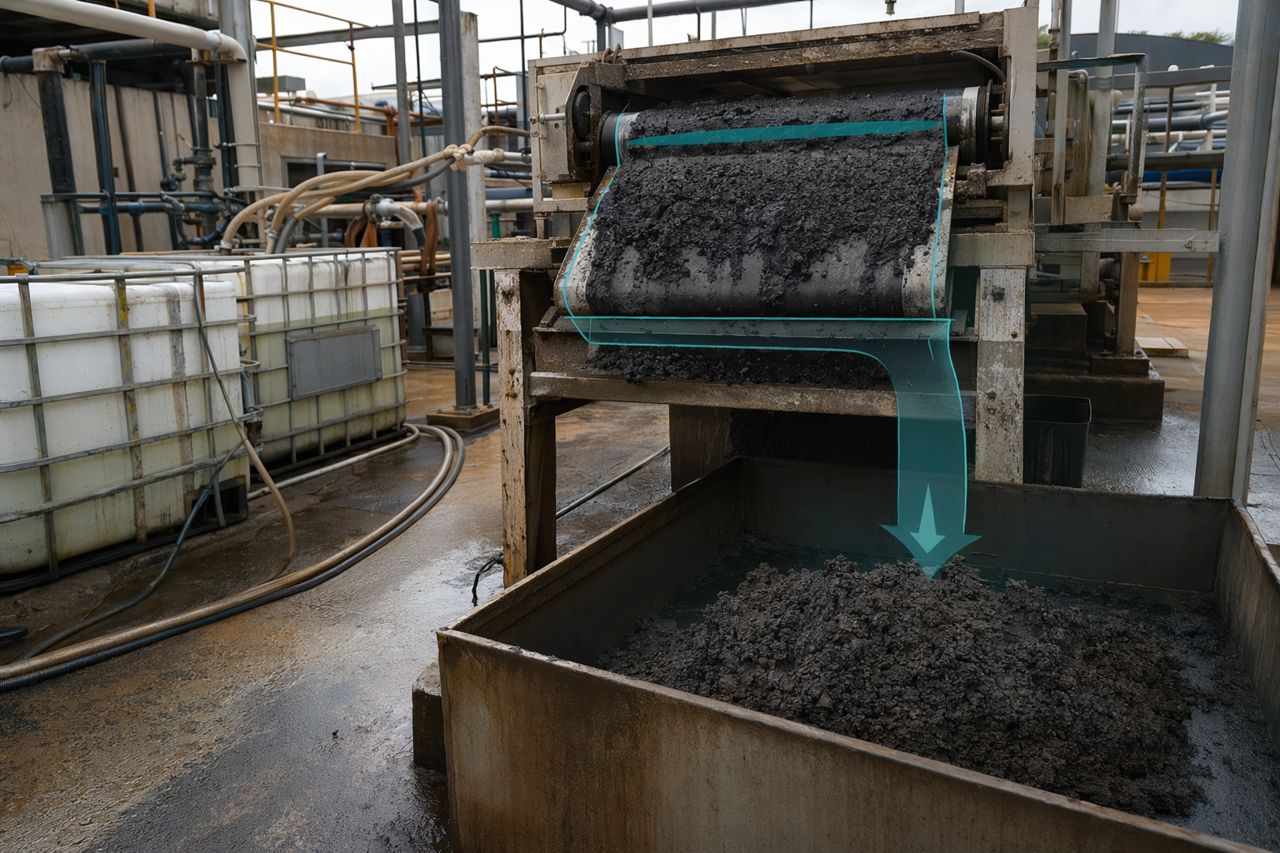
- Sludge that resists settling, thickening, or dewatering
- Aeration stress when organic loading arrives in pulses
- Discharge instability after style changes, shutdowns, or cleaning events
An enzyme program will not replace good segregation, pH control, aeration, or sludge management. It can, however, provide a targeted biological assist where protein and fat loading are creating treatment friction.
What Peltora enzyme programs are designed to do
Peltora enzyme blends are selected to support the breakdown of tannery-relevant organic fractions before they create downstream problems.
Protein load management
Protease-led components help hydrolyze proteinaceous residues associated with hide, skin, fleshings carryover, beamhouse residues, and fine suspended organics. The objective is to improve biodegradability and reduce the persistence of protein-rich material that can contribute to odor, scum, and sludge bulk.
Fat and fatliquor carryover control
Lipase-led components help address fat, oil, grease, and emulsified fatliquor residues. In leather goods effluent, this is often a practical issue: fat can form surface layers, coat solids, interfere with oxygen transfer, and increase the load on primary separation or biological treatment.
Sludge behavior support
When organic solids are partially hydrolyzed earlier in the process, plants may see improved sludge handling characteristics. Results depend on the plant, but the target is clearer phase separation, less greasy sludge, more predictable thickening, and reduced odor pressure during sludge handling.
Biological treatment resilience
Enzymes can help convert complex organic material into forms that are more accessible to the existing biological system. This supports a steadier treatment profile when the ETP is facing uneven COD/BOD loading, limited equalization, or production-driven shock loads.
Where the program can fit in the ETP
Peltora does not force one dosing point onto every tannery wastewater plant. We match the program to the site layout and the problem being solved.
Potential application points include:
- Equalization tank — useful when variable batches need more contact time before primary or biological treatment.
- Pre-biological conditioning point — useful where protein and fat load is reaching aeration with limited breakdown.
- Primary treatment support zone — useful where scum, floating fat, or organic suspended solids are stressing separation.
- Sludge handling interface — useful where odor, grease, and difficult dewatering are persistent concerns.
The right location depends on flow pattern, retention time, mixing, pH range, temperature, chemical dosing, and the existing treatment sequence.
Built for tannery wastewater variability, not generic wastewater claims
Peltora evaluates tannery wastewater as a changing industrial stream. We look at the practical details environmental managers already track:
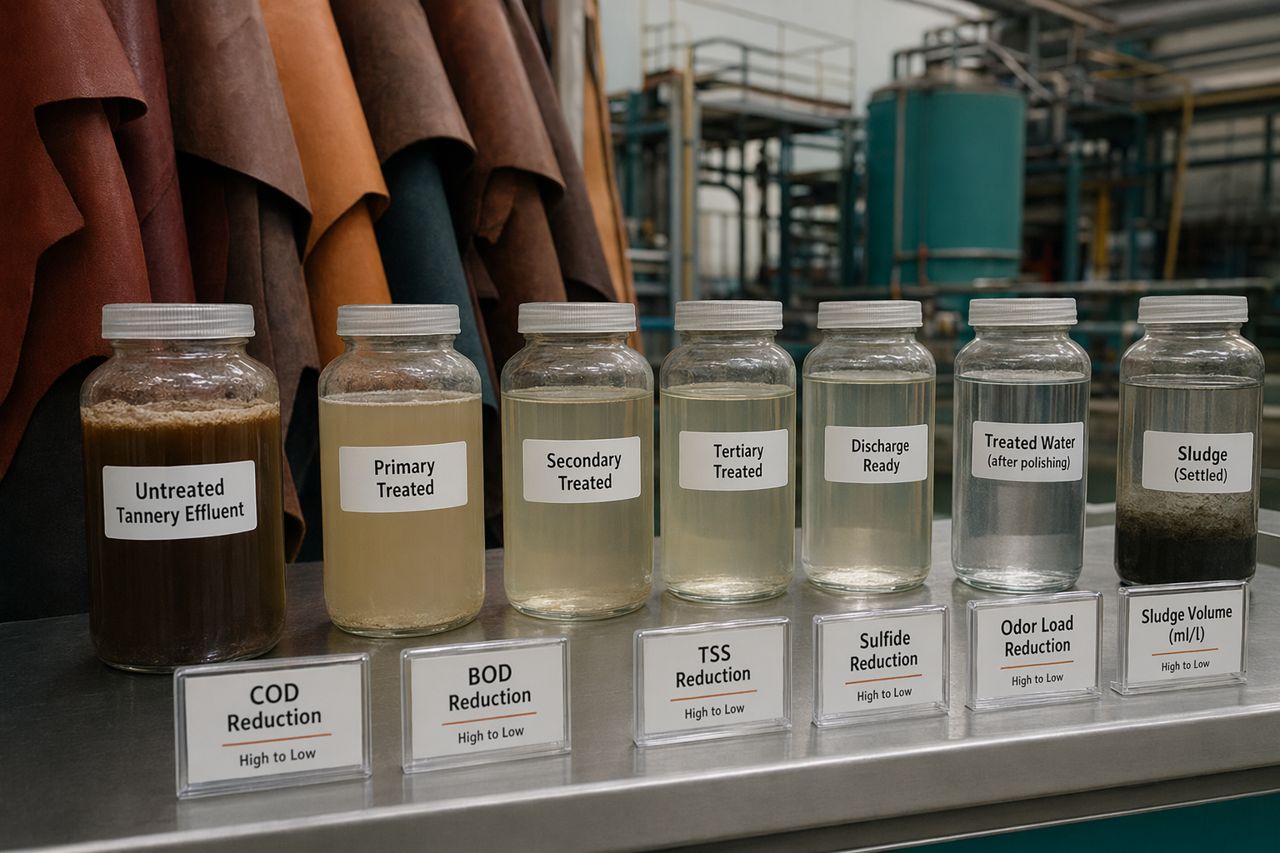
- COD and BOD trends across production schedules
- TSS and settleability behavior
- Sulfide and odor load indicators
- Equalization tank turnover and mixing quality
- pH swing after liming, deliming, washdown, or cleaning events
- Fat, oil, grease, and surface scum behavior
- Aeration capacity and dissolved oxygen stability
- Sludge volume, dewatering behavior, and disposal pressure
- Existing chemical program, including coagulant, flocculant, alkali, acid, and nutrient additions
This makes the recommendation plant-specific rather than a generic wastewater additive proposal.
Value for environmental managers
A well-matched Peltora program is intended to support measurable operational control:
- More stable ETP response during variable production weeks
- Lower odor pressure from protein, sulfide-associated, and anaerobic degradation zones
- Reduced floating grease and organic scum where fatliquor carryover is a driver
- Better biological accessibility of complex organic load
- Smoother COD and BOD reduction trends when operating conditions are suitable
- Improved sludge handling consistency
- Fewer emergency corrections caused by shock loading or poor phase separation
- Better documentation for internal review and compliance planning
Peltora does not position enzymes as a shortcut around disciplined ETP operation. We position them as a controlled tool for plants where organic complexity is creating recurring treatment instability.
Program development process
1. Effluent profile review
We begin with the wastewater reality of the site: production mix, wet-end and finishing operations, batch timing, ETP layout, chemical treatment, biological process, sludge route, and recent compliance pressure points.
2. Application logic
We identify the target fraction: protein, fat, mixed organic solids, scum, odor load, sludge handling, or biological stability. This determines the enzyme blend direction and the most practical dosing position.
3. Plant-fit recommendation
Peltora recommends an enzyme format, handling approach, and dosing routine that fits the existing ETP. The aim is to avoid unnecessary complexity for operators.
4. Observation plan
We define what the plant should watch: surface condition, odor, sludge settleability, scum thickness, aeration response, COD/BOD trend, TSS trend, and sludge handling behavior.
5. Supply and adjustment
Once the program is running, the recommendation can be adjusted based on plant feedback, production mix, seasonality, and ETP performance trends.
Suitable factory profiles
Peltora programs are relevant for leather goods factories and associated wastewater plants handling effluent from:
- Bags and small leather goods
- Footwear uppers and shoe components
- Belts, wallets, straps, and accessories
- Upholstery and automotive leather goods
- Garment leather processing
- Mixed leather finishing and assembly sites
- Factories with shared or centralized leather goods ETPs
The strongest fit is a plant that already operates a functioning ETP but needs better control over variable organic load, odor, scum, or sludge behavior.
What we need for a quote
To prepare a practical recommendation, share as much of the following as available:
- Factory type and main leather goods produced
- Daily flow range and production variability
- Current ETP process flow
- Equalization tank details and mixing condition
- Current COD, BOD, TSS, pH, sulfide, FOG, and sludge observations
- Main operating problem: odor, scum, discharge instability, sludge volume, dewatering, or biological upset
- Current chemical treatment and biological treatment setup
- Preferred product handling format and dosing constraints
- Location, packaging preference, and expected monthly requirement
Request a quote
If your leather goods factory ETP is dealing with unstable organic load, odor, greasy scum, or difficult sludge, Peltora can review the wastewater profile and recommend a plant-specific enzyme program.